By Nnamdi O. Madichie, PhD
The Youth Olympic Games will make history in Senegal. But their lasting significance will depend less on the medals won than on what happens to the infrastructure, skills and opportunities created once the athletes have gone home.
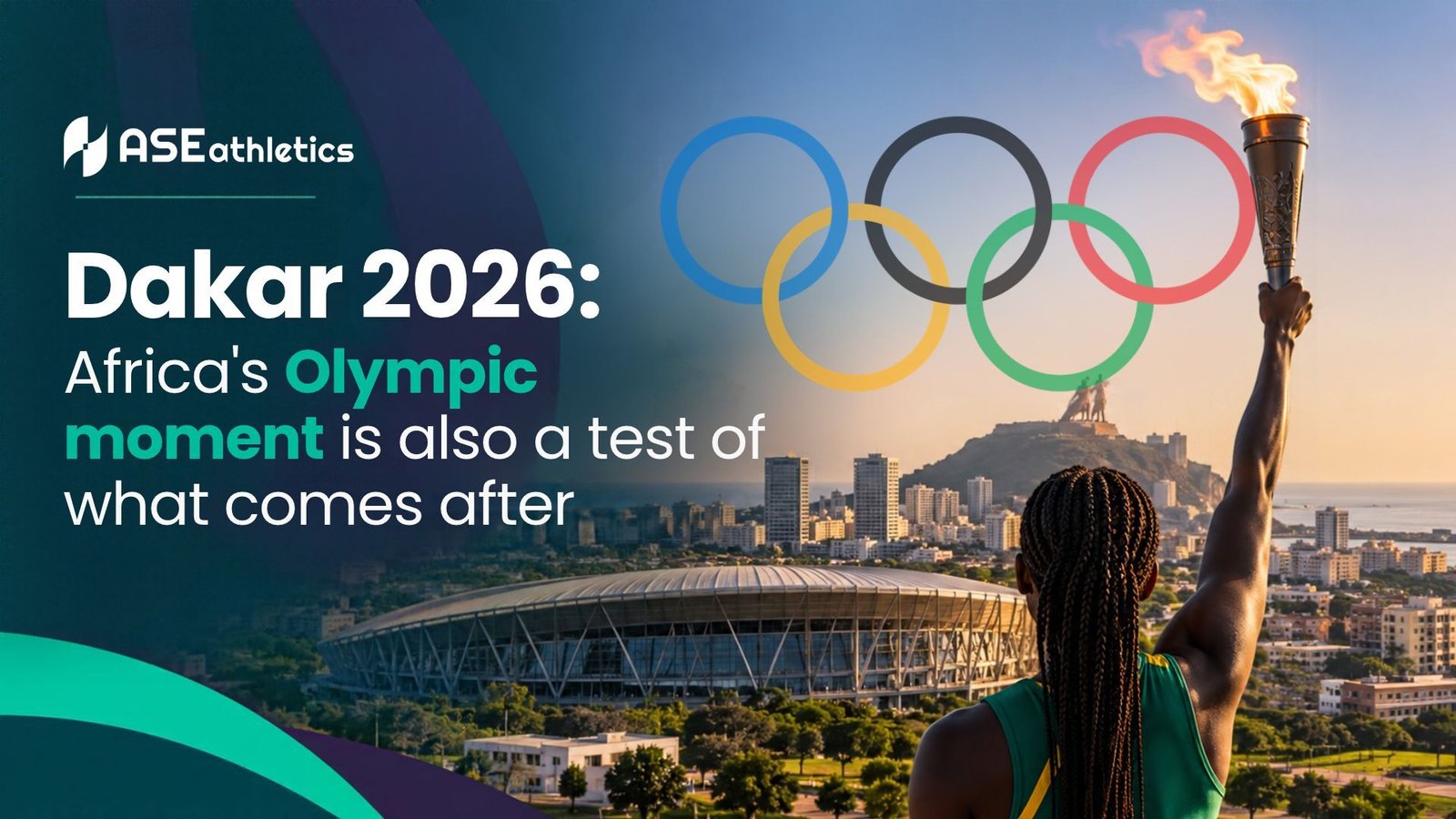
When the Youth Olympic Games open in Dakar on 31 October 2026, Senegal will make Olympic history – and for the very first time, an Olympic event will be staged on African soil. While the symbolism may be deemed powerful, the more important question may be what remains when the Olympic spotlight moves elsewhere – yes the torch has arrived, but what powers it on post-event? These are serious questions and matter for African sports going into the future.
Let’s consider this, Dakar 2026 has been presented not simply as a sporting event, but as a catalyst for urban development, youth employment, transport improvements, and investment in Senegal’s future. Its success will, therefore, need to be judged over years rather than weeks – perhaps Kenya’s World Athletics Championships 2029, Morocco’s World Cup finals host come 2030, and Rwanda’s 10-year Formula 1 deal starting 2030, may well be taking notes.
Building for life after the Games – from Dakar to Kenya, Morocco to Rwanda
Unlike some traditional mega-events, Dakar 2026 has sought to connect sporting infrastructure with longer-term public needs. The clearest example is Diamniadio, the rapidly developing urban area outside Dakar. The Youth Olympic Village is linked to Amadou Mahtar Mbow University, with accommodation intended to become student housing after the Games. Major facilities such as Dakar Arena, the Dakar Expo Centre and Abdoulaye Wade Stadium are likewise expected to continue serving sporting, cultural and commercial purposes.
Transport improvements form another part of the legacy. Investments connected with the Games are supporting the expansion of the Regional Express Train and Bus Rapid Transit networks, strengthening links between Dakar, Diamniadio, Saly and Blaise Diagne International Airport.
These projects matter because sporting venues have little value if they become expensive monuments to a two-week event. Their long-term usefulness will depend on whether they become part of everyday economic and social life.
The most valuable legacy may not be made of concrete
Perhaps the most important investment is in people. Through programmes such as the Dakar 2026 Learning Academy and FIT! Senegal Initiative, young people are being exposed to event management, logistics, technology, and other professional skills.
Thousands of volunteers will also acquire experience of working on an international sporting event.
For Senegal’s young population, this could be significant. Yet training and volunteering are not the same as permanent employment. The real test will be whether participants can use the experience gained through Dakar 2026 to build sustainable careers or businesses after 2026.
The same question applies to the wider local economy.
Hotels, restaurants, tour operators, and transport providers may benefit from increased visitors. But Senegal’s large informal economy also includes street traders, artisans, and independent service providers. Some may gain from the additional demand, others could find themselves squeezed out by security restrictions or competition from larger, internationally connected businesses.
The economic legacy of Dakar 2026 will therefore depend not only on how much money the Games generate, but on how widely that money circulates.
The Olympic opportunity has costs
The benefits should not obscure the pressures created by hosting the Games. Thousands of athletes, officials, journalists, and visitors will place additional demands on transport, healthcare, security, and other public services. The decision to spread activities across Dakar, Diamniadio and Saly creates further logistical complexity.
There is also a financial question that cannot be avoided. Senegal faces competing demands for public resources, including healthcare, energy, agriculture, and other essential services. Investment associated with Dakar 2026 must therefore be considered in terms of its opportunity cost as well as its potential economic return.
This makes post-Games planning particularly important.
A university residence that continues to house students, a transport system used daily by commuters, or a stadium that attracts regular sporting and cultural events has a very different economic value from infrastructure that becomes underused once the visitors leave.
Learning from earlier Youth Olympic hosts
Dakar is not the first city to confront this challenge. Singapore’s 2010 Youth Olympic Games made extensive use of university accommodation, while Innsbruck converted its Youth Olympic Village into housing. Buenos Aires used its 2018 Games to support affordable housing and urban regeneration.
Dakar’s model combines elements of these approaches. Its emphasis on university accommodation, public transport and permanent civic infrastructure reflects an attempt to ensure that the Games contribute to existing development priorities rather than creating an entirely separate Olympic landscape. That distinction could prove important.
The real Olympic legacy begins after November
Dakar 2026 will inevitably be remembered for its historic status. It will demonstrate that an African city can host an Olympic event and place African sport at the centre of the global sporting calendar.
But symbolism, while important, is only part of the story. The deeper test begins after the closing ceremony. Will young Senegalese workers turn temporary opportunities into lasting careers? Will local businesses share in the economic benefits? Will the new transport networks improve everyday mobility? Will university housing address genuine demand? And will the major sporting facilities remain financially and socially useful?
These questions cannot be answered in advance. What Dakar 2026 can do is create the conditions for a lasting legacy. Whether that potential becomes reality will depend on how Senegal manages the infrastructure, institutions and opportunities created by the Games in the years that follow.
The Olympic moment may last two weeks. Its real legacy will be measured in decades.