By Nnamdi O. Madichie, PhD
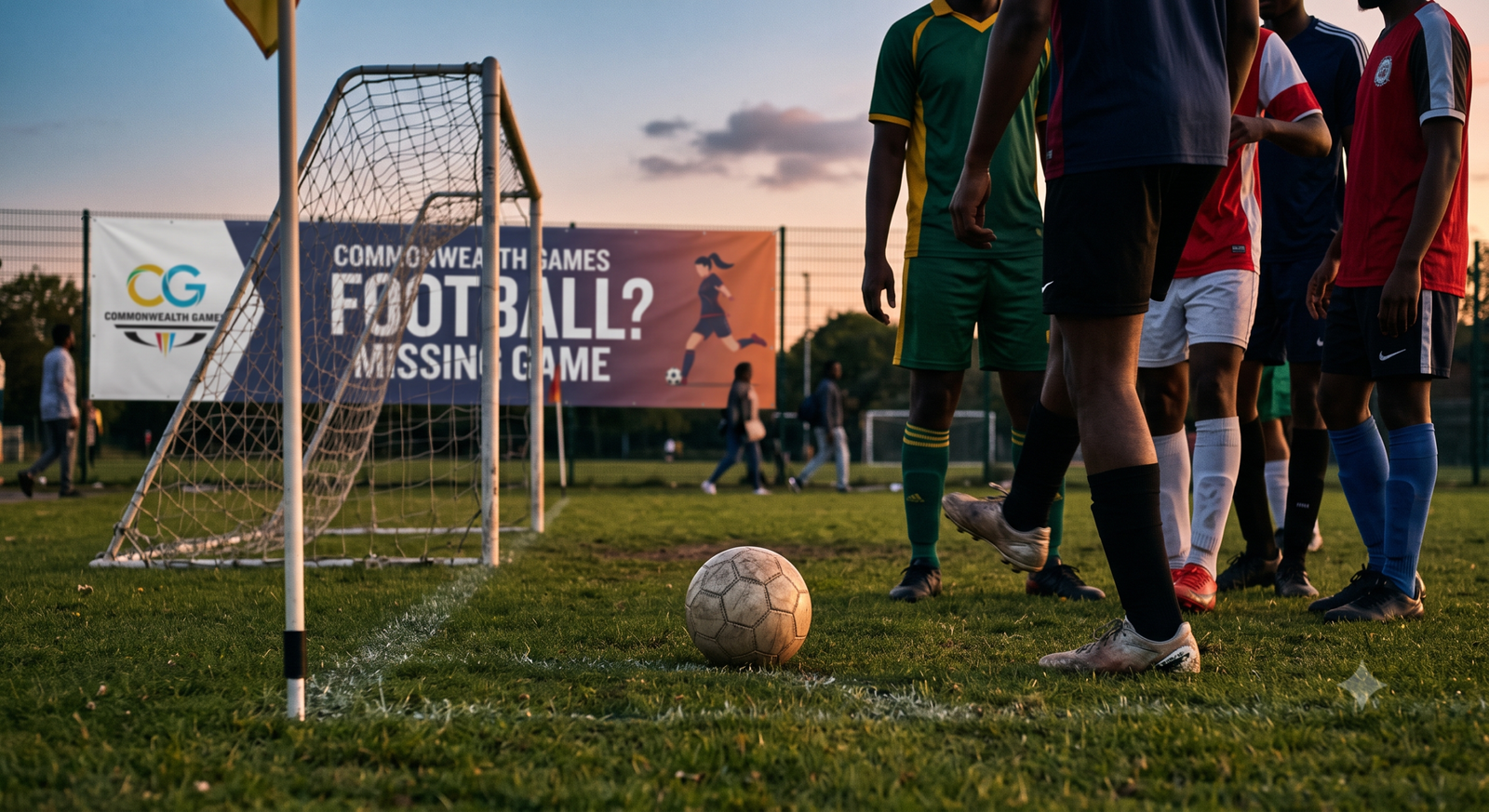
Every edition of the Commonwealth Games celebrates the very best of sport – athletics, swimming, rugby sevens, netball, squash, and many more. Yet one glaring omission continues to puzzle fans around the world – football, the world’s most popular sport. For nearly a century, the Games has evolved to reflect changing sporting landscapes. Women’s boxing was introduced before the Olympics adopted it. Para-sports have become fully integrated into the programme, while newer disciplines such as women’s cricket have found a successful home. The Games have never been afraid to innovate. So why has football been left behind?
Football Is Already the Commonwealth’s Game
Few sports unite the Commonwealth quite like football. From Ghana, Nigeria and South Africa to England, Scotland, Australia, New Zealand, Canada, Jamaica, India and Malaysia, football is deeply embedded in national culture. It inspires millions, creates opportunities for young people and connects communities across continents. Ironically, many of the world’s leading football nations are Commonwealth members, yet the Games fail to showcase the sport that arguably best represents them all.
Imagine Commonwealth rivalries such as Ghana vs Nigeria, England vs Australia, Jamaica vs Canada, or Scotland vs Cameroon. These are fixtures that rarely occur in international competition and could create a unique football identity distinct from the FIFA World Cup.
Why Has Football Been Excluded?
Some reasons may be understandable – football already has a crowded international calendar, hosting the sport requires multiple venues and significant investment, and FIFA’s competition schedule leaves little room for another major tournament. There has also been concern that football’s popularity could overshadow smaller sports that rely on the Games for global exposure. These challenges are real, but no longer insurmountable.
A Practical Way Forward
The Olympic Games solved a similar problem decades ago by making the men’s football tournament an Under-23 competition while retaining a senior women’s tournament. The Commonwealth Games could adopt an equally innovative approach. A compact competition featuring Under-23 men’s teams, senior women’s teams, or even futsal and beach soccer would reduce costs, avoid clashes with the international calendar and provide valuable development opportunities for emerging talent.
Beginning with women’s football could be particularly compelling. Women’s football has grown rapidly across the Commonwealth, with England, Australia, Canada, Nigeria and Jamaica all achieving significant international success. Such a tournament would also reinforce the Commonwealth’s commitment to gender equality.
More Than Just Another Tournament
Football’s inclusion would not simply add another medal event. It could strengthen the Games themselves. As “the Games” faces increasing financial pressures and declining interest from potential host cities e.g., Durban and Victoria recently, football offers significant commercial potential. Larger TV audiences, increased sponsorship, stronger ticket sales and greater global media attention could benefit the entire Games programme – not just football.
Just as importantly, football is one of the world’s most accessible sports. A Commonwealth football tournament could become a powerful platform for youth development, social inclusion and international friendship, reflecting the very values on which the Games were founded.
Time to Finish the Job
The Commonwealth Games has never stood still, having continually adapted to remain relevant while promoting excellence, friendship and respect. Football embodies all of those values. The question is no longer whether football belongs in the Commonwealth Games. The more important question is how it can be introduced in a sustainable and uniquely Commonwealth way.
As the world prepares for the Commonwealth Games this week, i.e., July 2026 in Glasgow, Scotland, it is worth highlighting that the event is a showcase of some of the finest talents from 56 nations spread across Africa, Europe, Asia, the Pacific, and the Caribbean and the Americas. After almost a century, the absence of the world’s most popular sport no longer feels like tradition – this feels like unfinished business.